This site / Product and building / 2026
How I built this site
On September 7 I told Codex it was time to create my first portfolio. I’d been working with coding agents for almost a year, and I wanted a site that showed how I work instead of just describing it. It went live about eight weeks later.
I made the decisions and the agents wrote the code. Codex did most of the work in September, and Claude Code took over in October. Each decision below starts with what I typed at the time, typos and all, then what it turned into.
September 17 · To Codex
The idea behind the site
people could browse the timeline of my career and the background of each of those pages is showing a period in time.
It came from an episode of Bluey where the kids act out human history with the packaging while their parents build a porch swing. On this site, as you scroll through my career, a place grows behind it.
September 20 · To Codex
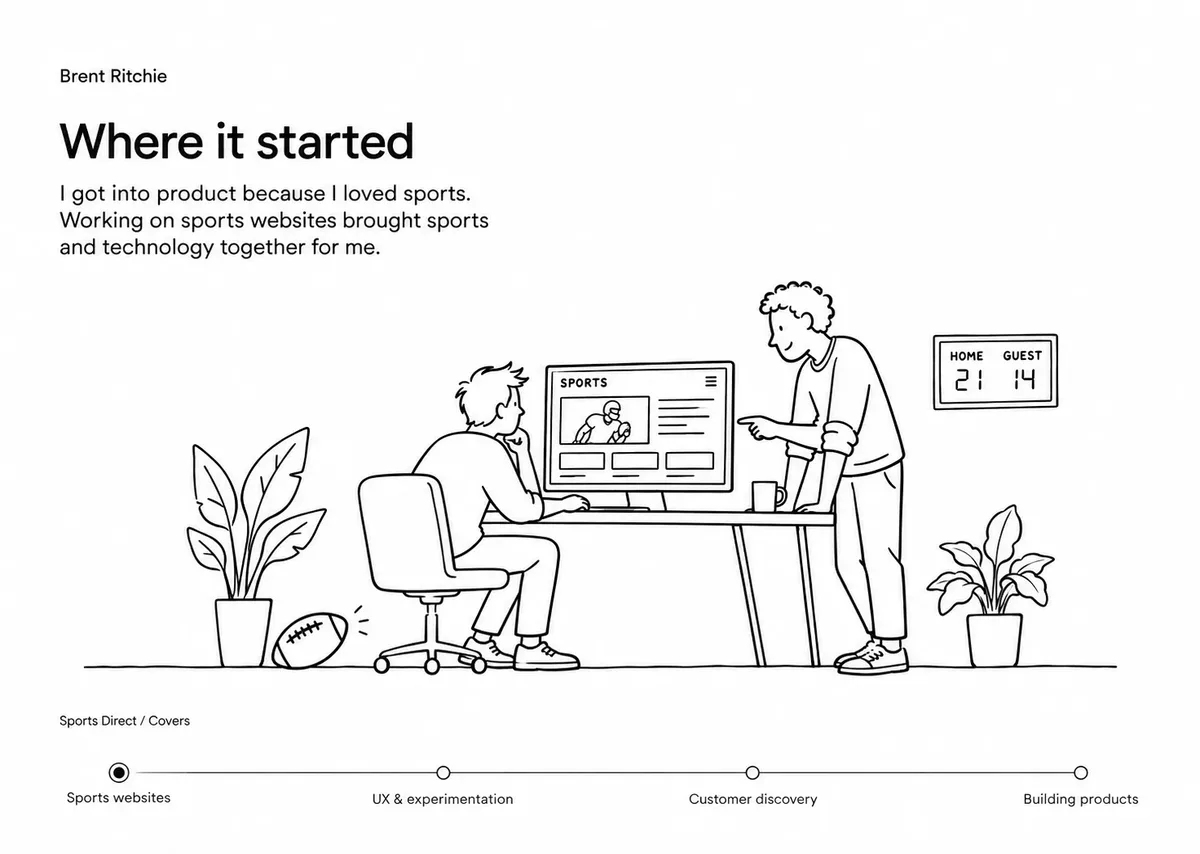
No drawings of me at a computer
maybe that might make me come off looking like I'm stating that my career is as important as evolution, which might come off the wrong way.
Codex’s first drawings showed me at a computer, working on sports websites. I didn’t want that. I thought about running human evolution alongside my career instead, but I worried it would say the wrong thing. We went back to the drawing board and landed on one place changing over time, in black-and-white line art.
September 20 · To Codex
A town being built
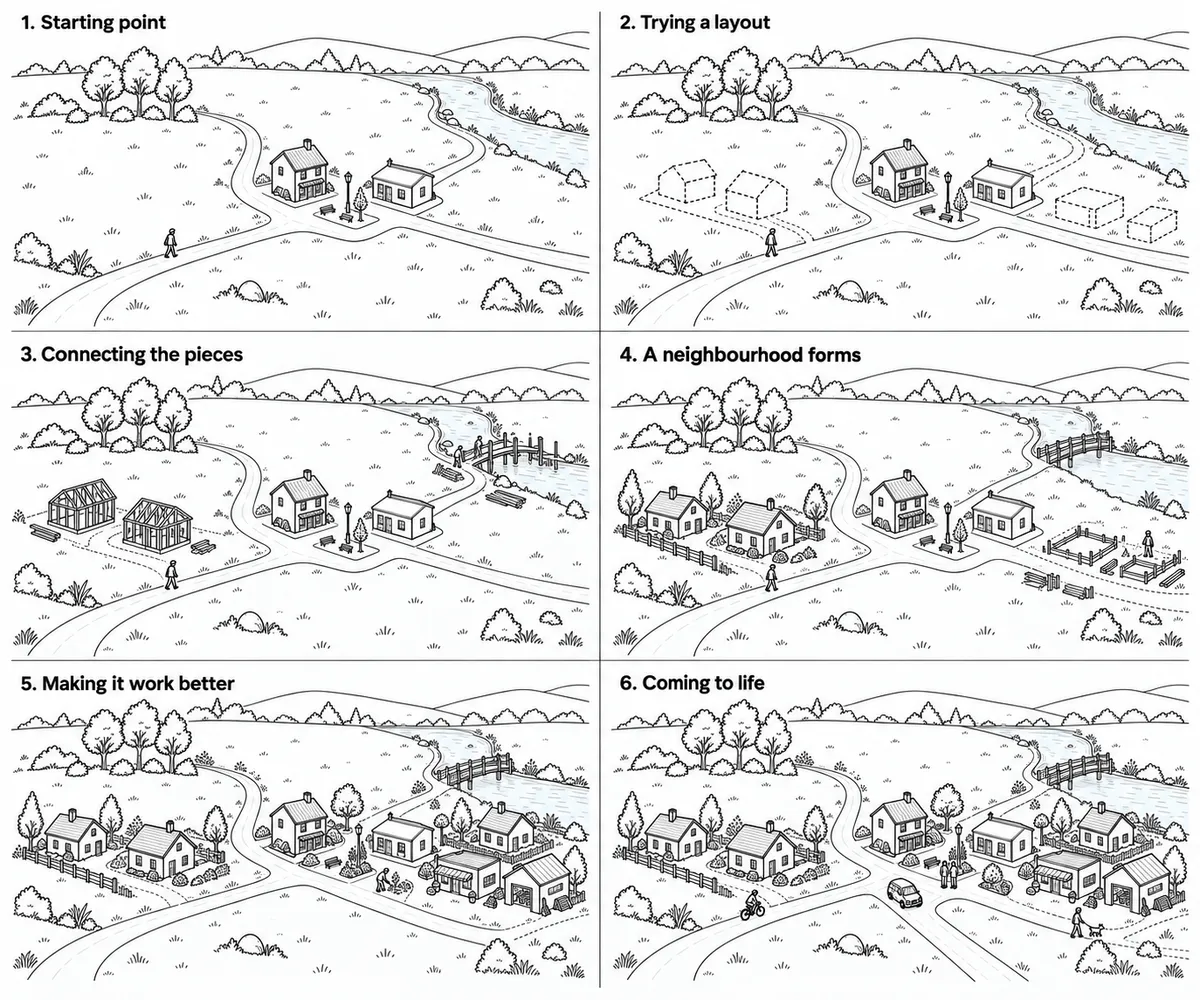
it would be helpful to not just show a static image, but show the animation of a town being built like in cities skylines.
I used to love playing Cities: Skylines, starting from a blank slate and watching a city come to life. I wanted that here, with roads, foundations and walls going up as you scroll, and the town coming apart again when you scroll back. It’s also how my career has gone. Things get bigger and more complex, and problems show up that you fix while you’re still growing. I asked Codex if it was too ambitious, and it said it was ambitious, but achievable.
September 20 · To Codex
Designing the finished city first
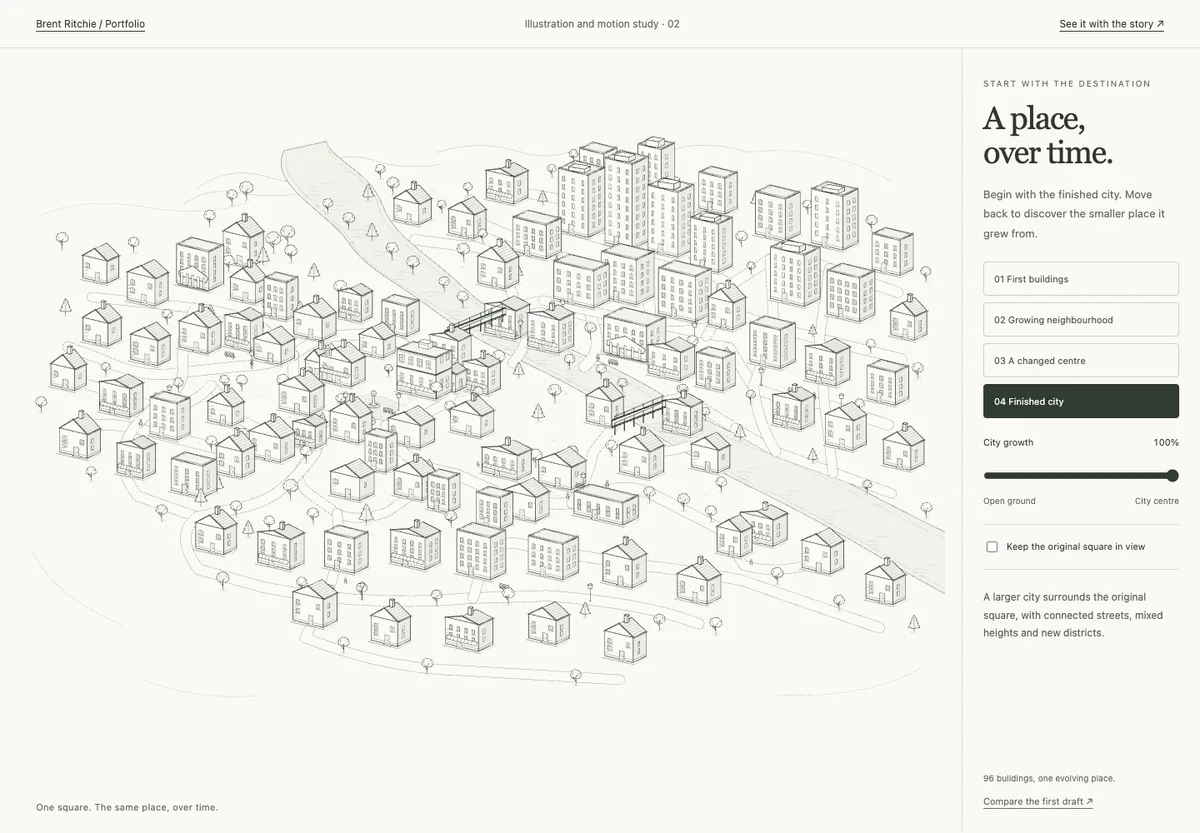
working backwards from the end product, just makes so much sense.
The first town Codex drew stopped at six stages. I wanted it to grow into a real city, with more steps in between. Then Codex suggested drawing the finished city first and taking it apart to get each earlier stage, and it clicked right away. We drew a 96-building city, then worked back from there to open ground.
September 22 · To Codex
Writing in my own voice
can't you just look in the history of our chats in codex. that is how i write. it's not for a formal audience, but it is authentically me
The first drafts of my story were accurate, but they didn’t sound like me. Codex suggested gathering writing samples, like work emails and LinkedIn posts. I pointed it to the way I type to it instead. It worked from those messages, keeping how I think things through and cutting the repetition.
October 6 · To Claude Code
Taking out the red
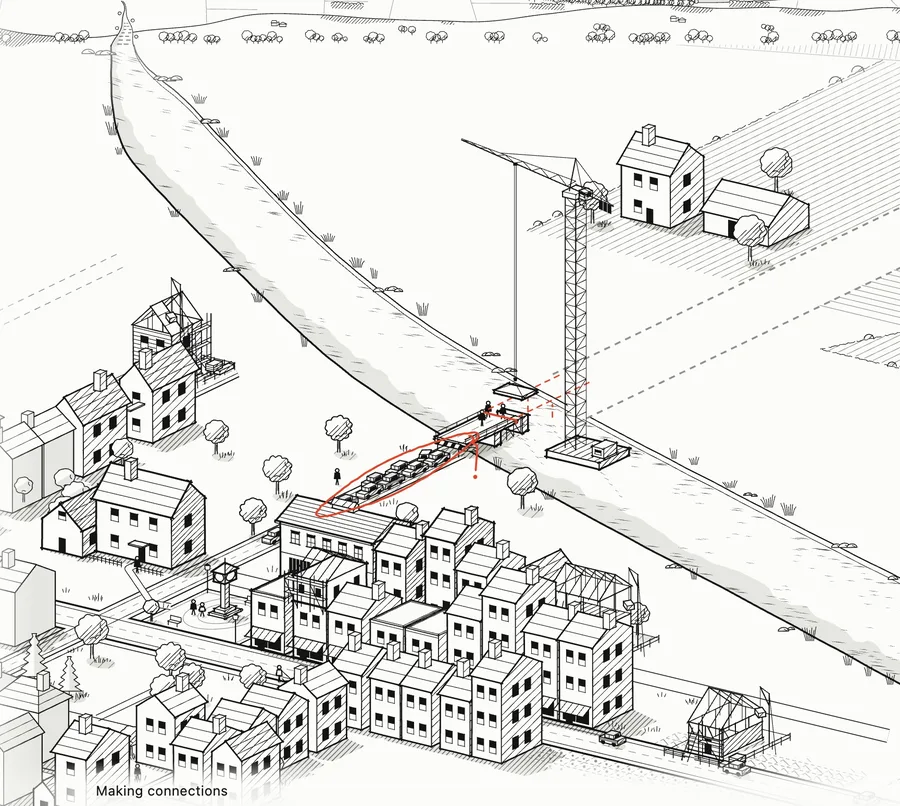
we only have one place that it fits, and it almost stands out too much without using it elsewhere.
In October I picked a new ink-drawn look for the city, with one red accent to mark problems and fixes. The next day I saw it in place and took it out. It fit in only one spot, and on its own it stood out too much.
Before 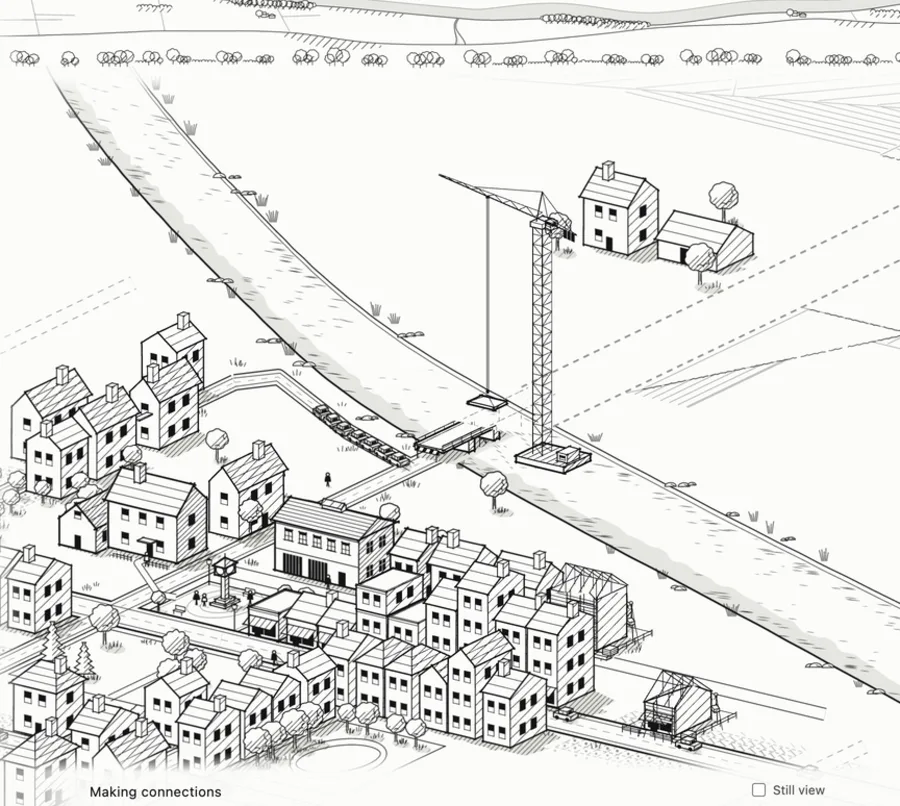
After October 11 · To Claude Code
Starting and ending with me
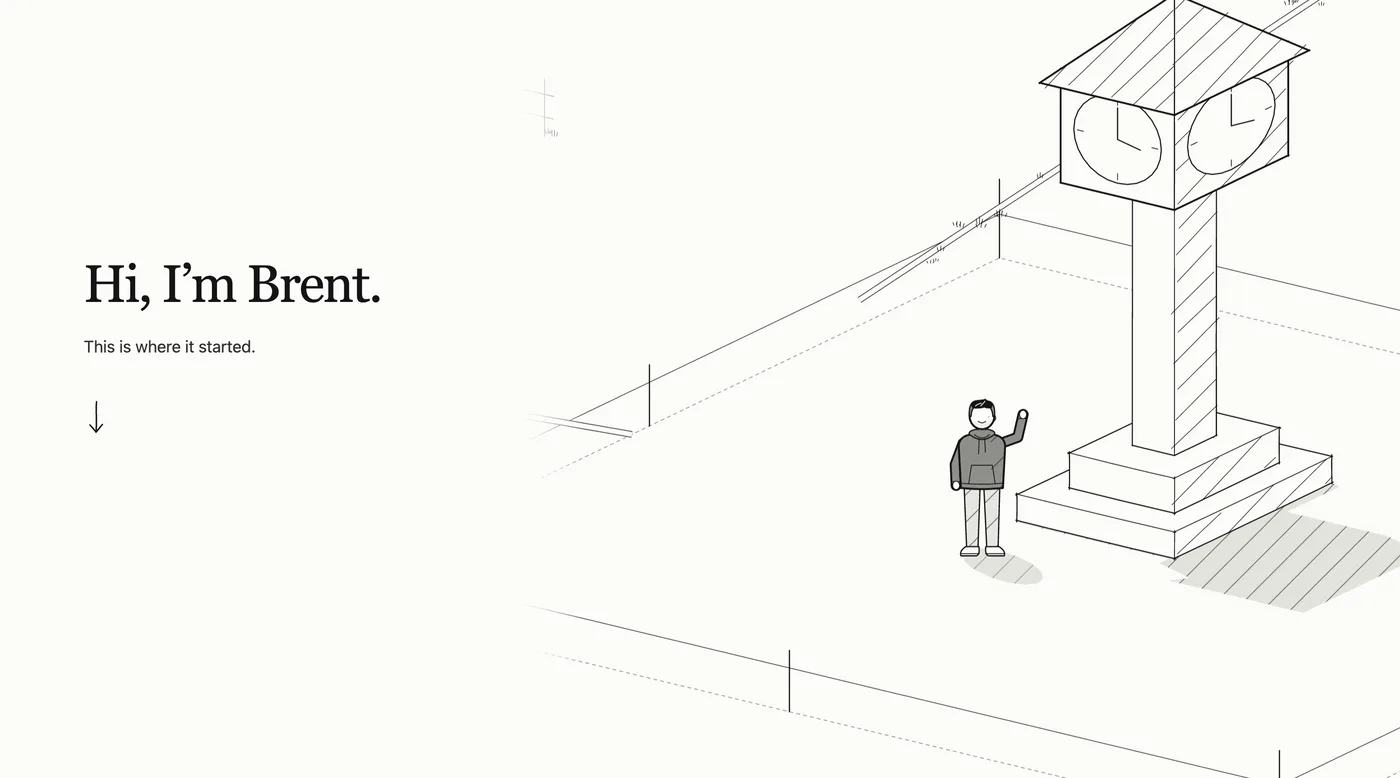
Perhaps starting in the first frame it's an introduction to me somehow in the city, very up close.
I wanted the story to open on me, up close in the city, saying “Hi, I’m Brent.” At the end, it would zoom all the way back down to me. Claude sketched three versions. I picked the one where I’m standing in the same spot at the start and the end, by the clock in the first square, and I watched it in motion before approving it. “Hi, I’m Brent.” is still the first line on the homepage.
October 18 · To Claude Code
Rewriting it in my own words
I want writing help potentially, but i also want to write it in my own words as much as possible.
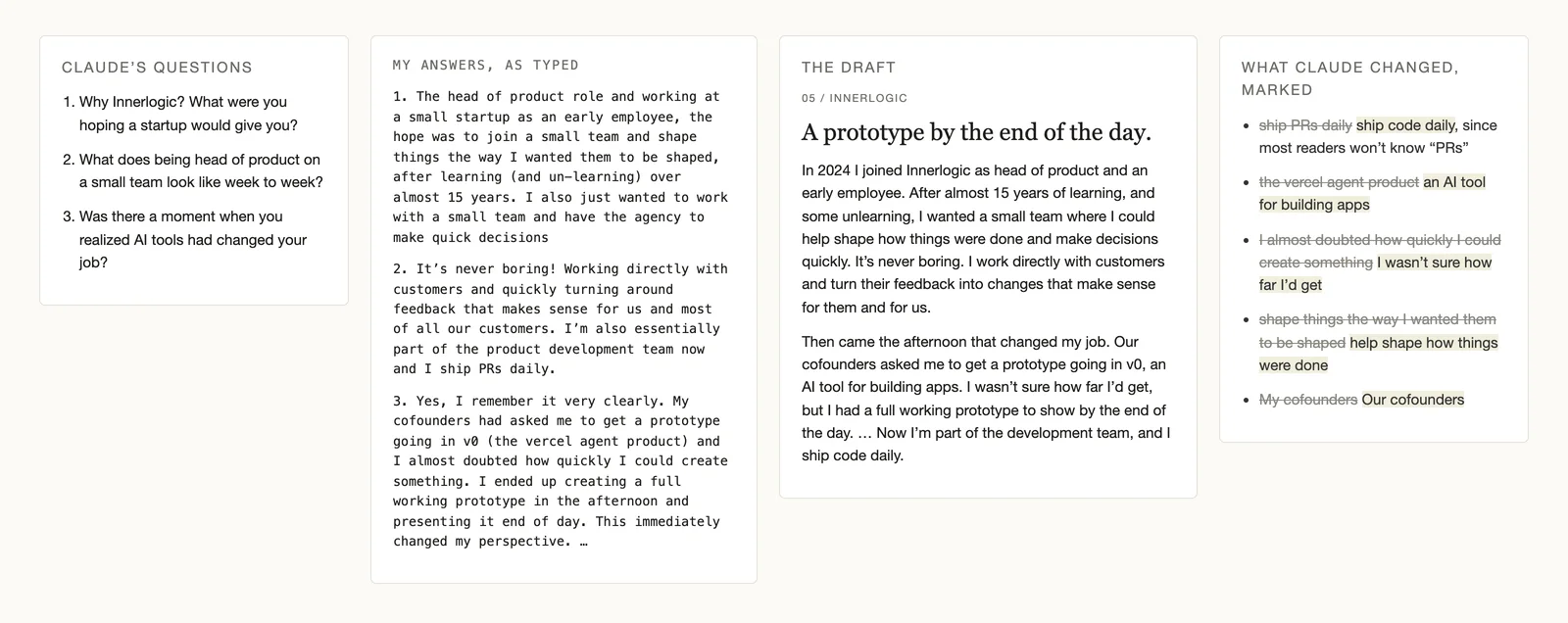
I decided to rewrite everything on the site. Claude asked me two or three questions about each section, I answered the way I’d talk, and it arranged my answers and marked everything it added or changed. The first chapter took four drafts.
October 31 · To Claude Code
Finding what sounded like AI
please recognize the areas that i identified, and use my logic to find other patterns in this that sound like ai slop
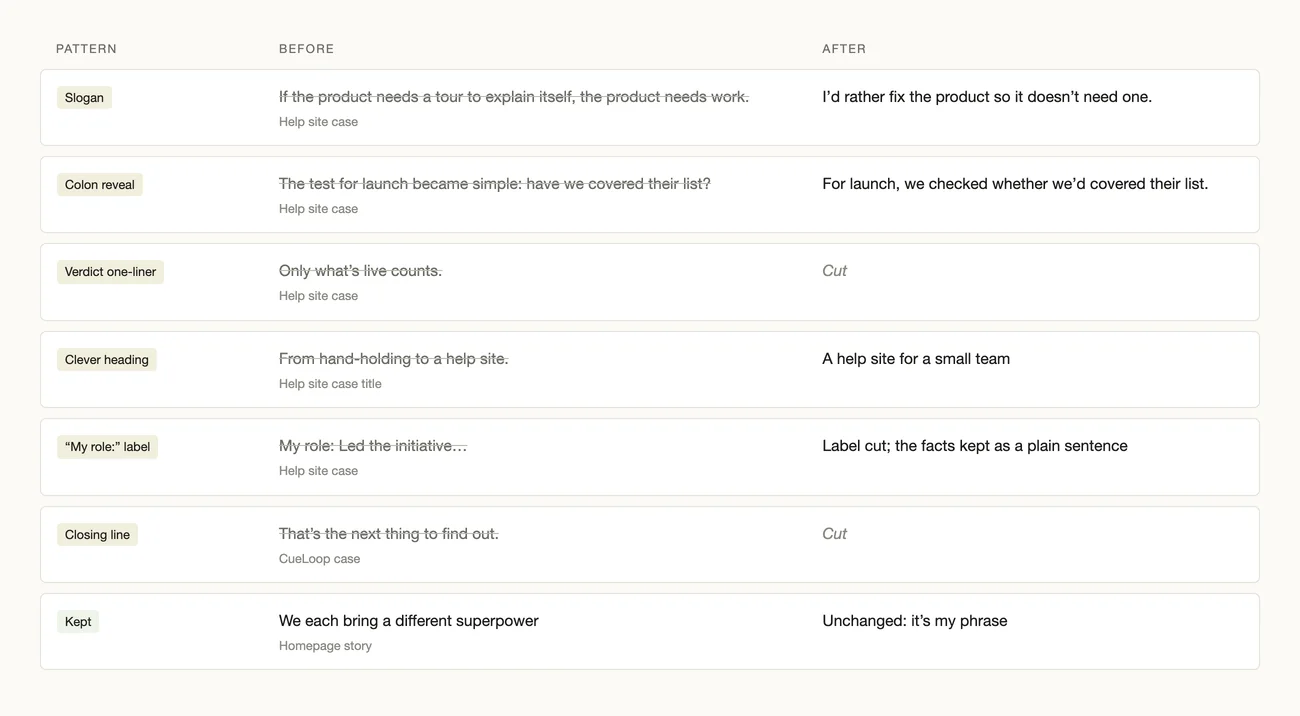
While reading a case study, I marked lines that sounded like AI wrote them, like “The plan didn’t change.” Instead of only fixing those, I asked Claude to work out what they had in common. It found seven patterns, then 36 spots across the site. I kept one phrase it flagged, “superpower”, because it’s mine.
October 31 · To Claude Code
Shipping before the proofread
i will do that later even if the site is live. i want to get this moving
Claude suggested one more full proofread and a few fact checks before publishing. I decided to proofread the live site instead and keep updating it as my work changes. It went live that night, and I’ve been changing it since.
November 2 · To Claude Code
Checks that match the change
i want to rapidly iterate on this portfolio project. how can we delineate what takes a lot of tests vs what doesn't?
Changing one line of hover text ran the full 12-minute set of checks, which seemed like overkill. Claude proposed four levels, from a quick look for wording changes to the full set before anything is published. I had it written into the project’s rules, so every agent follows them.
Where it stands
It’s been live since October 31, and I’m still building it. It taught me how ambitious I could be with this product. I’d explain my vision and it just came to life.
I think the one thing I’d do differently is write out all the content before starting on any concept. I did a little of that, but I should have done more. Then I wouldn’t have spent as much time afterward rewriting it in my own words.